
Alligators in Your Florida Community: When to Leave Them Alone, When to Call for Help, and How to Keep Everyone Safe
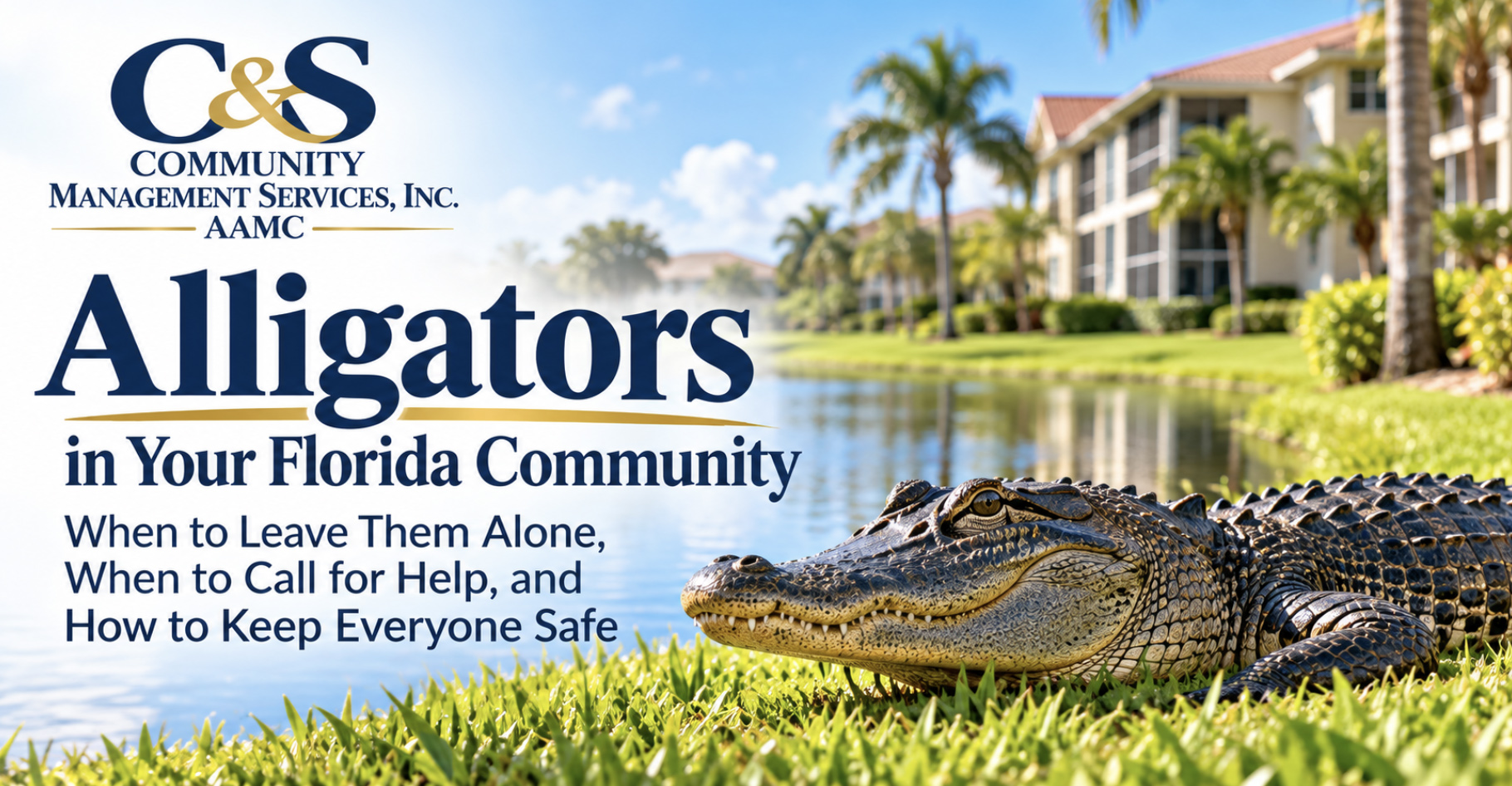
Protecting residents, respecting wildlife, and managing one of Florida's most controversial community issues.
In Southwest Florida, alligators are part of everyday life. Whether you live in Bradenton,
Sarasota, Venice, Lakewood Ranch, or another Florida community, seeing an alligator in a retention pond, lake, or wetland is not unusual.
But what happens when an alligator becomes a regular visitor to your neighborhood? Some residents may enjoy watching the animal from a distance and believe it should be left alone. Others may worry about their children, grandchildren, or pets and insist that the association have it removed.
For condominium and homeowners association boards, these situations can quickly become controversial. The challenge is finding the right balance between protecting residents and respecting Florida's native wildlife. Fortunately, Florida has established procedures to help communities make informed decisions.
1. Seeing an Alligator Doesn't Automatically Mean There's a Problem
Alligators are native to Florida and play an important role in the state's ecosystem. They help maintain the balance of aquatic environments and naturally inhabit freshwater lakes, ponds, marshes, and wetlands. Many of these habitats are located within or alongside residential communities. An alligator swimming across a retention pond or sunning itself along a shoreline is not necessarily dangerous or behaving abnormally.
In fact, the Florida Fish and Wildlife Conservation Commission (FWC) encourages residents to appreciate alligators from a safe distance. The presence of an alligator alone is generally not a reason to demand its removal.
2. When Does an Alligator Become a Safety Concern?
While most alligators avoid people, certain behaviors may indicate a potential problem.
Examples include:
-
An alligator repeatedly approaching people rather than moving away.
-
An alligator appearing to have lost its natural fear of humans.
-
An alligator lingering in an area heavily used by residents or pets and creating a credible safety concern.
-
An alligator entering a swimming pool, garage, or other area where it poses a potential danger.
-
An alligator displaying threatening behavior toward people or pets.
FWC generally considers an alligator at least four feet long that is believed to pose a threat to people, pets, or property eligible for evaluation under its Statewide Nuisance Alligator Program. Smaller alligators may also qualify under certain circumstances. The important distinction is that an alligator should be evaluated based on its behavior and the risk it presents—not simply because someone has seen it.
3. Who Decides Whether an Alligator Should Be Removed?
Florida's Statewide Nuisance Alligator Program, commonly called SNAP, provides a process for addressing potentially dangerous alligators. Residents or association representatives can report concerns to FWC.
Florida's Nuisance Alligator Hotline: 866-FWC-GATOR (866-392-4286)
FWC evaluates the information and determines whether the animal qualifies for removal under its program. If removal is authorized, a contracted nuisance alligator trapper handles the situation. Association boards and management companies should not attempt to capture, relocate, or otherwise handle an alligator themselves. If an alligator presents an immediate emergency involving a person, call 911.
4. What Many Residents Don't Realize: Removal Usually Does Not Mean Relocation
This is perhaps the most important fact for communities to understand. When residents request that an alligator be trapped, many assume the animal will simply be transported to a remote lake, wildlife preserve, or another suitable habitat.That is generally not what happens in Florida.
FWC explains that relocating nuisance alligators is usually not a practical solution. Relocated animals may attempt to return to their original territory or come into conflict with other alligators. As a result, nuisance alligators captured through the state program are generally killed, although limited exceptions may apply. This reality often changes how residents view a request for removal.
Those who initially wanted an alligator trapped may reconsider once they understand the likely outcome. On the other hand, when an animal poses a genuine danger, protecting human life and safety must remain a priority. The goal should be to avoid unnecessary removal while ensuring legitimate threats are addressed.
5. What Happens When Residents Disagree?
Imagine a six-foot alligator living in a community pond. Some residents have watched it for months. They consider it part of the neighborhood's natural environment and enjoy seeing it from their lanais. Other residents are frightened. They walk their dogs near the pond, have young children visiting, or worry that someone could be injured. Before long, emails begin arriving at the management office. One group demands removal. Another insists that the alligator be protected.
What should the board do?
The best approach is to establish a consistent, safety-based procedure rather than making the decision through a popularity contest. The board should consider the animal's reported behavior, the location, the potential danger, and guidance from wildlife professionals. If the situation warrants it, FWC should be contacted for an evaluation. Boards should also understand that FWC's nuisance alligator program requires appropriate property-owner or management authorization before removal from private or publicly managed property.
The association should determine who has authority to coordinate that permission under its governing documents and applicable law. Ultimately, the decision should be guided by documented safety concerns and professional wildlife management—not by which group of residents sends the most emails.
6. Never Feed an Alligator
One of the greatest dangers to both residents and alligators is feeding. When people feed alligators, the animals can begin associating humans with food. An alligator that would normally avoid people may start approaching them instead. That behavior can make the animal dangerous and increase the likelihood that it will eventually need to be removed.
Florida law prohibits feeding alligators. Associations should regularly remind residents, guests, vendors, and visitors never to feed them. Residents should also avoid leaving food scraps or other attractants near waterways. Feeding an alligator may seem harmless, but it can ultimately cost the animal its life.
7. Pets Require Special Attention
Dogs and other small animals can attract alligators, particularly near the water's edge. Residents should keep pets leashed and away from pond banks, drainage canals, and other areas where alligators may be present. Pets should never be allowed to swim in waters inhabited by alligators.
Walking pets near waterways at dusk, nighttime, or dawn deserves particular caution because alligators may be more active during those periods. Communities with walking paths bordering lakes or retention ponds may wish to remind residents of these precautions through newsletters, signs, and community notices.
8. Should Associations Install Alligator Warning Signs?
Warning signs can be a useful part of a community's safety program. Signs near retention ponds, lakes, fishing areas, and walking paths can remind residents and visitors that alligators may be present. However, signs alone do not eliminate the need to respond appropriately to a reported danger.
Associations should also consider:
-
Educating new residents about living near Florida wildlife.
-
Reminding residents to maintain a safe distance from alligators.
-
Keeping pets away from shorelines.
-
Discouraging swimming or wading in community ponds.
-
Documenting reported encounters and safety concerns.
-
Temporarily restricting access to an affected common area when circumstances warrant.
A proactive approach can help prevent unnecessary confrontations.
9. Why Removing One Alligator May Not Solve the Problem
Many Florida condominium and HOA communities contain retention ponds, lakes, and wetlands that naturally attract wildlife. Removing an alligator does not remove the habitat. Another alligator may eventually occupy the same area. That is why education and prevention are so important.
Communities should not assume that removing every visible alligator will permanently eliminate the possibility of future encounters. A more effective long-term approach is to teach residents how to live safely alongside Florida wildlife while maintaining a clear procedure for addressing animals that present legitimate threats.
10. Every Association Should Have an Alligator Response Procedure
Rather than waiting until residents are arguing about an alligator, condominium and HOA boards should consider establishing a written response procedure.
A practical procedure could include:
-
Receive and document the report. Record the location, date, observed behavior, and any photographs obtained from a safe distance.
-
Evaluate immediate safety needs. Warn residents or temporarily restrict access when appropriate.
-
Contact FWC when warranted. Report potentially dangerous behavior to the Nuisance Alligator Hotline.
-
Coordinate with wildlife professionals. Do not allow residents, employees, or vendors to attempt unauthorized trapping or relocation.
-
Communicate with residents. Explain the situation, the precautions being taken, and the role of FWC.
-
Maintain consistent records. Document reports, agency communications, and actions taken.
-
Review the procedure periodically. Make sure it remains consistent with current FWC guidance and the association's governing documents.
Having a procedure in place helps management respond promptly, reduces confusion, and demonstrates that the board takes both resident safety and wildlife protection seriously.
Finding the Right Balance
Florida's alligators were here long before most of our residential communities were built. They are an important part of the natural environment that makes Southwest Florida such a unique place to live. At the same time, residents have every reason to expect their condominium or homeowners association to take legitimate safety concerns seriously.
The solution is neither to remove every alligator nor to ignore potentially dangerous behavior. It is to use common sense, educate residents, follow established wildlife management procedures, and seek professional assistance when necessary. Protecting wildlife and protecting people are not opposing goals. With the right approach, Florida communities can do both.
Important Contact Information
Florida Fish and Wildlife Conservation Commission
Statewide Nuisance Alligator Hotline: 866-392-4286 (866-FWC-GATOR)
Official information:
For an immediate emergency, call 911.
C&S Community Management Services, Inc. serves condominium and homeowners associations throughout Southwest Florida, including Bradenton, Sarasota, Venice, St. Pete, and surrounding communities. We believe informed boards and educated residents are essential to maintaining safe, responsible, and well-managed communities.
This article provides general educational information. Associations should consult FWC regarding wildlife concerns and their legal counsel regarding association-specific responsibilities and governing documents.
When you subscribe to the blog, we will send you an e-mail when there are new updates on the site so you wouldn't miss them.
